Briefly Describe How the Himalayan Mountains Formed
Science explaining the formation of Himalayas Alfred Wegener a German meteorologist coined the Theory of Continental Drift which explains the first ideas about Pangea tectonic plates and the thought that continents were moving away from or closer to each other. Plates moved apart c.

The Himalayas Himalayas Facts Nature Pbs
The Himalayas are formed from three parallel ranges of mountains.
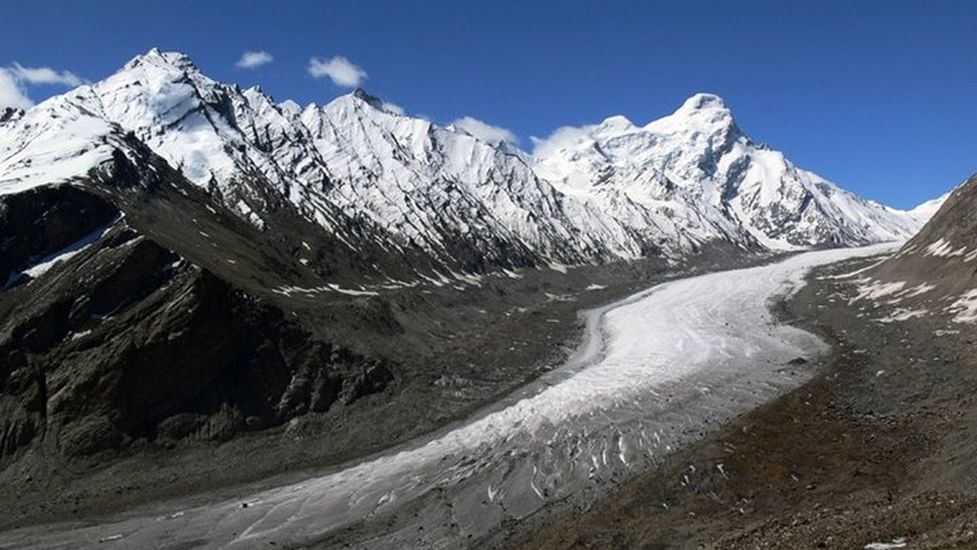
. Briefly describe how mountains such as the himalayas form - 1337190 tofi2786 tofi2786 14022018 Araling Panlipunan Junior High School Briefly describe how mountains such as the himalayas form 1. The movement occurs at a rate of about 2. Is this idea consistent with the theory of plate tectonics.
Up to 24 cash back The Cascade Mountain range of North America is part of the Pacific Northwest section of what is often called the Pacific Ring of Fire that circles around the Pacific Ocean. These processes are associated with large-scale movements of the earths crust plate tectonics. Define the the paleomagnetism.
Some predict that California will sink into the ocean. Briefly describe the major differences between the evolution of the Appalachian Mountains and the North American Cordillera. Briefly describe how the Himalaya Mountains formed.
William Smith was working as a surveyor in the late eighteenth century. Briefly describe the major differences between the evolution of the Appalachian Mountains and the North American Cordillera. Advertisement Answer 49 5 34 ayalakayla361 AnswerEurasian fault block 1 cm Lesser Block mountains form along fault blocks.
The tectonic plates still are moving and the mountain range continues to rise. The enormous pressure forces resulting from this shock caused a gigantic mountain uplift. These huge chunks of the Earths crust move within molten rock called.
As two continental plates collide the crust buckles thickens vertically and fractures. The Himadri also called the Great or Inner Himalayas is the northern most range of the Himalayas. Plates moved in closer b.
The Himalayan range is the highest and the most rugged mountain range in the world. Mountain formation refers to the geological processes that underlie the formation of mountains. The crust itself is made up of several large plates called tectonic plates which are free floating.
The Himalayas were formed as a result of the collision between the Indian Plate and Eurasian Plate. The mountain formation primarily occurred in three phases that began about 50 million to 70 million years ago and most recently occurred about 600000 years ago. Briefly describe how the Himalaya Mountains formed.
Briefly describe how and where block mountains form. The Himalayan mountain range and Tibetan plateau have formed as a result of the collision between the Indian Plate and Eurasian Plate which began 50 million years ago and continues today. The Himalayas and Tibetan plateau trend east-west and stretch 2900 km along the border between India and Tibet.
The Himalayan mountain chain is an example of a continental collision. The lofty Himalayas are among the most dramatic and visible creations of plate-tectonic forces. The Himalaya Mountains were formed from a collision of tectonic plates.
He noticed that certain fossils were found in certain layers of sedimentary or igneous rock that the same order of strata could be found in areas that were far apart and. 40 million years ago the Indian plate collided with the Eurasian plate. The older colder plate is denser and descends beneath the younger less dense plate 7.
12 What is the ring of fire. Upwarped volcanic fault-block and folded complex. Continental-continental convergence because the less dense buoyant continental lithosphere results in collision and produces mountains.
12 What is the ring of fire. Paleomagnetism is the natural magnetism in rock bodies which was acquired from Earths magnetic field at the time when the rock formed. The IndoAustralian plate got separated from the Gondwanaland and drifted towards the north.
The Himalayas were formed as a result of the collision between the Indian Plate and Eurasian Plate. Volcanic mountains are formed from eruptions of. This leads to the.
Mountains are divided into four main types. The orogenic belt containing the Himalayas formed as a result of the Eurasian Plate buckling from its collision with the Indian Plate. Pacific Ring of.
Unlike catastrophism _____ states that mountains formed slowly over time. There are many components affecting how mountainsvolcanoes form. How Himalayan mountain was formed explain briefly.
Mountains are formed by movement within the Earths crust. The Himalaya Mountains formed as a result of a collision between the Indian landmass and the Asian continent. The collision of two large landmasses India and Eurasia driven by plate.
Is this idea consistent with the theory of plate tectonics. Which of the following describes how the Himalayan mountain range formed on Earth at a convergent plate boundary. Briefly describe how the Himalaya Mountains formed.
This range is in a single unbroken line and has. Briefly describe how mountain belts such as the Himalayas form. Formation of the Himalayas interactive simulations eduMedia.
The Himalayan mountain range includes Mt. This theory illustrates the origin of the Himalayas. Read the description given below.
225 million years ago India was a large island situated off the Australian coast and separated from Asia by the Tethys Ocean. The Himadri The Himachal and. Briefly describe how mountain systems such as the Himalayas form.
Mountain formation is related to plate tectonics. Upwarped mountains form from pressure under the earths crust pushing upward into a peak. Everest the highest mountain on earth.
Some predict that California will sink into the ocean. As given is the tectonic plates or how our world evolves in a very long period. Plates slid past each other dPlates moved with each other in.
The Himalayas in the west have more vegetation and a lower elevation than the Himalayas to the center. There are 3000 km of the Himalayas with Mount Everest being the highest. Because of the impact of convectional currents the crust was split into many pieces.
As a result of this collision the sedimentary rocks which were settled in the large-scale depression in the Earths crust called Tethys were folded and formed the Himalayas. Thrust and reverse fault movement are an important component of mountain formation. Briefly describe how and where block mountains form.
The range first began forming millions of years ago through movement of the earths plate and volcanic action with erosion also playing a part.
How Were The Himalayas Formed Rocks Tell A New Story

The Himalayas Himalayas Facts Nature Pbs

Why Mount Everest Keeps Changing Its Height


Comments
Post a Comment